A Pilates ring, also known as a magic circle, is a lightweight resistance tool that can help runners improve muscle engagement, core strength and movement control. Designed with flexible resistance and padded grips on either side, it can be used in a variety of Pilates ring exercises to target the glutes, inner thighs, hip stabilisers, arms and abdominal muscles. Compact and easy to store, a Pilates ring is a practical addition to home workouts, supplementary strength sessions and running conditioning programmes.
Benefits of Using a Pilates Ring for Running
For runners, incorporating a Pilates ring into a regular strength and conditioning routine can help develop the muscular control needed to support efficient running mechanics. Its gentle resistance encourages controlled movement and targeted muscle activation, particularly around the hips, pelvis and core.
Hip stability and glute activation are important considerations for runners. Exercises such as glute bridges with a Pilates ring positioned between the knees encourage controlled hip alignment and engagement of the surrounding muscles. This can complement running-specific strength training and help runners develop greater awareness of lower-body positioning.
The ring can also be incorporated into core strengthening exercises for runners. Using it during selected Pilates movements can encourage controlled muscle engagement and improve awareness of pelvic and trunk positioning. A stronger, more controlled core can support posture and help runners maintain their technique as fatigue develops.
How to Incorporate a Pilates Ring into Running Training
A Pilates ring is a versatile tool for strength training for runners, particularly when time, space or access to gym equipment is limited. It can be used during short home workouts, supplementary conditioning sessions or selected low-impact routines on recovery days.
For the best results, incorporate Pilates ring exercises alongside a balanced running-strength programme that includes lower-body resistance training, single-leg exercises and progressive loading. These approaches help develop the broader strength and muscular capacity required for running.
Although a Pilates ring can support targeted muscle engagement, it should complement rather than replace running-specific strength training, gradual mileage progression and adequate recovery. Consistency, correct technique and appropriate exercise selection are more important than applying maximum pressure to the ring.
Whether you are a beginner runner or an experienced distance runner, a Pilates ring can be a useful addition to your training routine, helping you focus on core strength, hip stability, glute activation and controlled movement as part of a comprehensive approach to running performance.
Pilates Ring Exercises for Runners
Pilates ring exercises can be adapted to suit different fitness levels and training goals. Useful options include:
-
Glute bridges with a Pilates ring: Place the ring between the knees to encourage controlled hip positioning while strengthening the glutes.
-
Inner thigh squeezes: Apply gentle, steady pressure to target the adductor muscles, which contribute to hip and pelvic control.
-
Core exercises with a Pilates ring: Incorporate the ring into appropriate abdominal exercises to encourage trunk stability and controlled movement.
-
Upper-body resistance exercises: Use the ring to target the chest, arms and shoulders while developing postural awareness.
Perform each exercise with controlled movements, consistent breathing and appropriate resistance. Prioritise technique over squeezing the ring as hard as possible.
The Pilates Bridge with a Pilates ring held between the knees

Hip Stability - Glutes, adductors, core. Pelvic Alignment and Inner-Thigh Engagement
Holding the Pilates ring gently between the knees encourages the inner thighs to activate while the glutes lift and support the pelvis. Focus on maintaining a neutral pelvis and keeping the knees tracking in line with the hips and ankles throughout the bridge. This controlled engagement helps improve pelvic alignment, supports hip stability, and creates a stronger connection between the core and lower body.
Supine twist with a Pilates ring held between the ankle
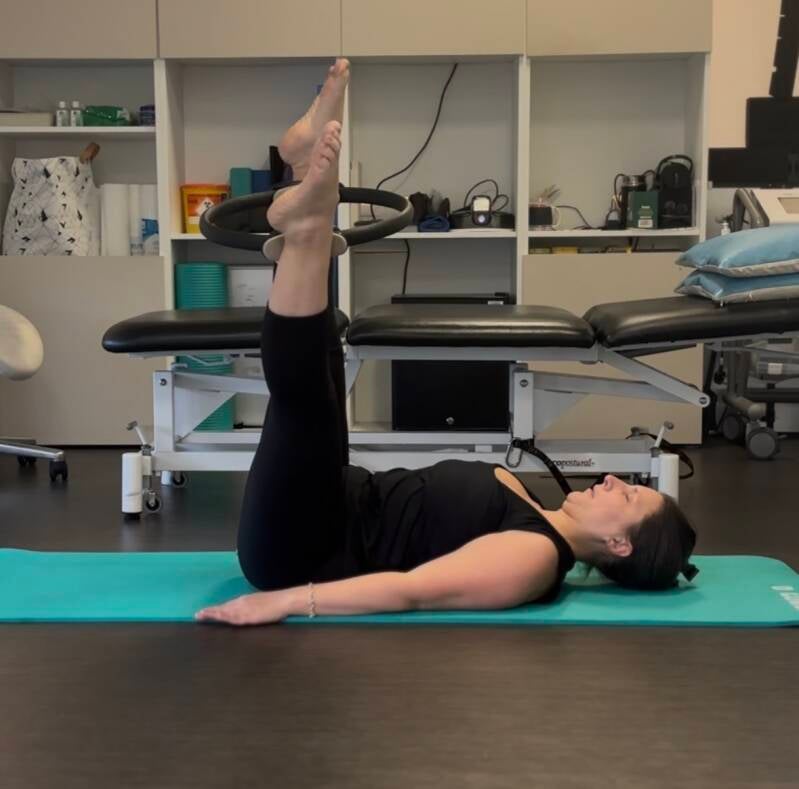
Trunk: Lower Abdominals and Coordination. Key focus: Pelvic stability and controlled rotation
Keeping the Pilates ring gently squeezed between the ankles encourages inner-thigh engagement while the legs move as one unit. As you rotate the legs side to side, maintain a heavy, grounded feeling through both shoulders and use the lower abdominals to control the range of motion. Move slowly and avoid allowing the pelvis to roll excessively, prioritising smooth, deliberate rotation over depth.
Mermaid pose supported by a Pilates ring

Postural - Hip and spine mobility. Core engagement and controlled breathing
Use the Pilates ring as a gentle point of support to encourage upright alignment while activating the deep abdominal muscles. Slow, steady breathing helps release tension through the ribs and lower back, allowing each side bend and spinal rotation to feel more controlled, spacious, and balanced.
Single-Leg Kicks with Resistance from a Pilates Ring
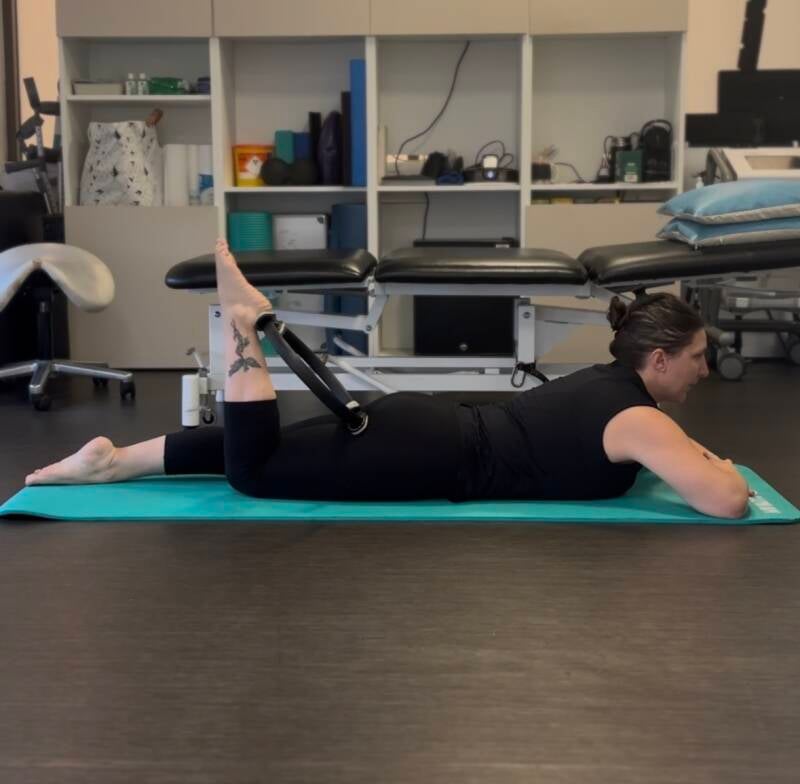
Hamstrings
Using a Pilates ring during single-leg kicks adds controlled resistance that helps strengthen the hamstrings while encouraging stability through the hips and core. As you press into the ring with one leg, focus on keeping your pelvis steady and your movements slow and deliberate. This exercise can improve leg control, support balanced muscle development, and promote greater awareness of proper alignment.
The Hundred with Legs Inside the Pilates Ring

Strong Core and Abductors
Performing The Hundred with your legs positioned inside a Pilates ring adds focused resistance to this classic exercise. As you maintain a gentle outward press against the ring, your abductors work alongside the deep abdominal muscles to stabilize the pelvis and support controlled movement. Keep your shoulders relaxed, your spine long, and your breath steady as you pump the arms, allowing the exercise to build endurance, improve hip stability, and strengthen your core connection.
Side Leg Lift with Adduction
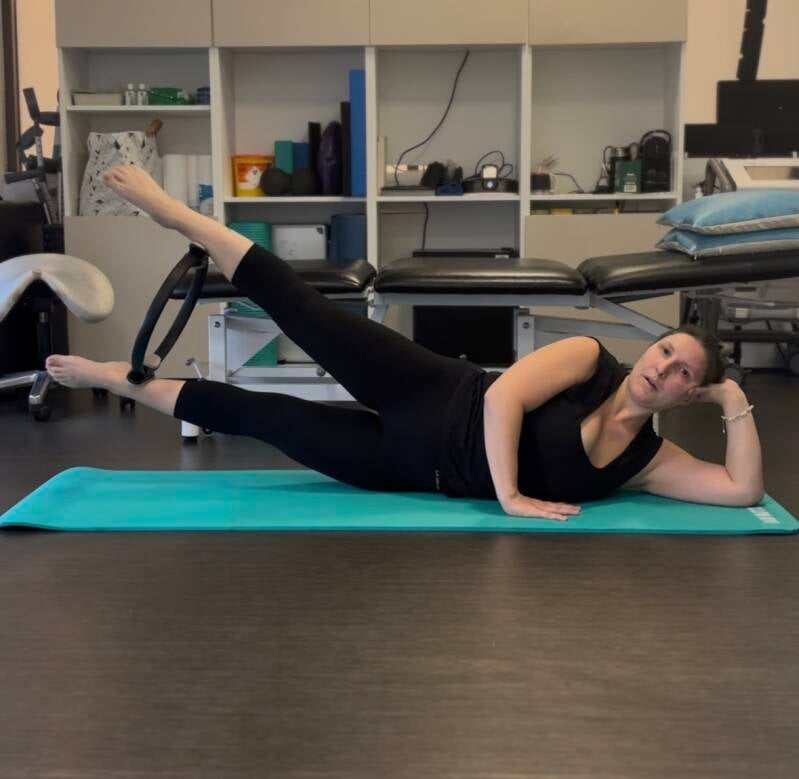
Trunk, Glutes, Adductors & Coordination. Controlled Hip Stability
This exercise encourages the hips and pelvis to stay steady while the legs move through a controlled range of motion. By engaging the glutes, inner thighs, and core together, it can help improve balance, support efficient walking and running mechanics, and build greater control for everyday movements such as stepping sideways, climbing stairs, and changing direction.
Content is for educational purposes and does not replace medical advice.
Add comment
Comments