As you enter your second trimester, your body begins to change more noticeably. Your belly grows, your weight increases, and your centre of gravity shifts to accommodate your growing baby.
During this stage, it's important to keep your body moving, maintain good posture and build mobility to help you feel comfortable as your body adapts.
As your baby grows, you may also notice tension around your shoulders, back and rib cage. Incorporating gentle movement and stretching into your routine can help improve mobility, release tension and support better posture.
Here are two exercises inspired by the exercises in Pilates for Pregnancy by Anya Hayes that you can try during your second trimester:
Standing Corkscrew Arms
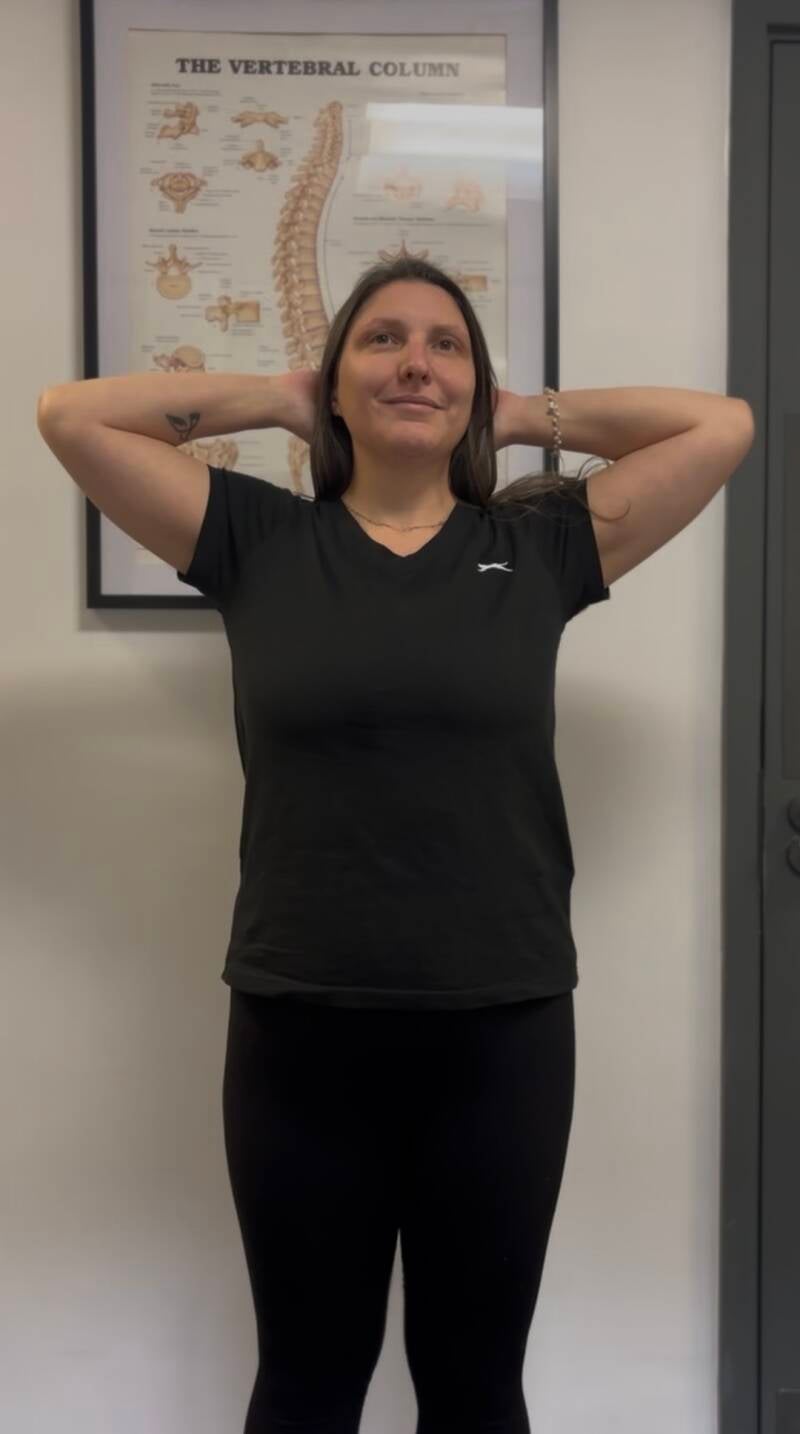
Your growing bump can make it increasingly challenging to maintain an upright posture. You may notice your shoulders rounding forward and your upper back becoming more slumped as your body adapts to the extra weight. Corkscrew Arms is a gentle Pilates exercise that encourages upper-body mobility, helps open the chest and rib cage, and promotes better postural alignment. It can help create a feeling of more space through your torso for comfortable breathing as your baby continues to grow.
How to do it:
- Start in a comfortable standing position with your feet hip-width apart and your knees soft.
- Inhale gently as you prepare for the movement.
- As you exhale, gently engage your BUMP and bring your elbows upwards.
- Inhale as you gently shrug your shoulders up.
- Exhale as you release the shoulders down.
Benefits:
- Encourages an open chest and improved upper-body posture.
- Helps counteract the rounded or slumped shoulder position that can develop during pregnancy.
- Promotes mobility through the shoulders and upper back.
- Encourages rib cage movement to support comfortable breathing.
- Helps release tension around the neck and shoulders.
Side Reach on a Swiss Ball
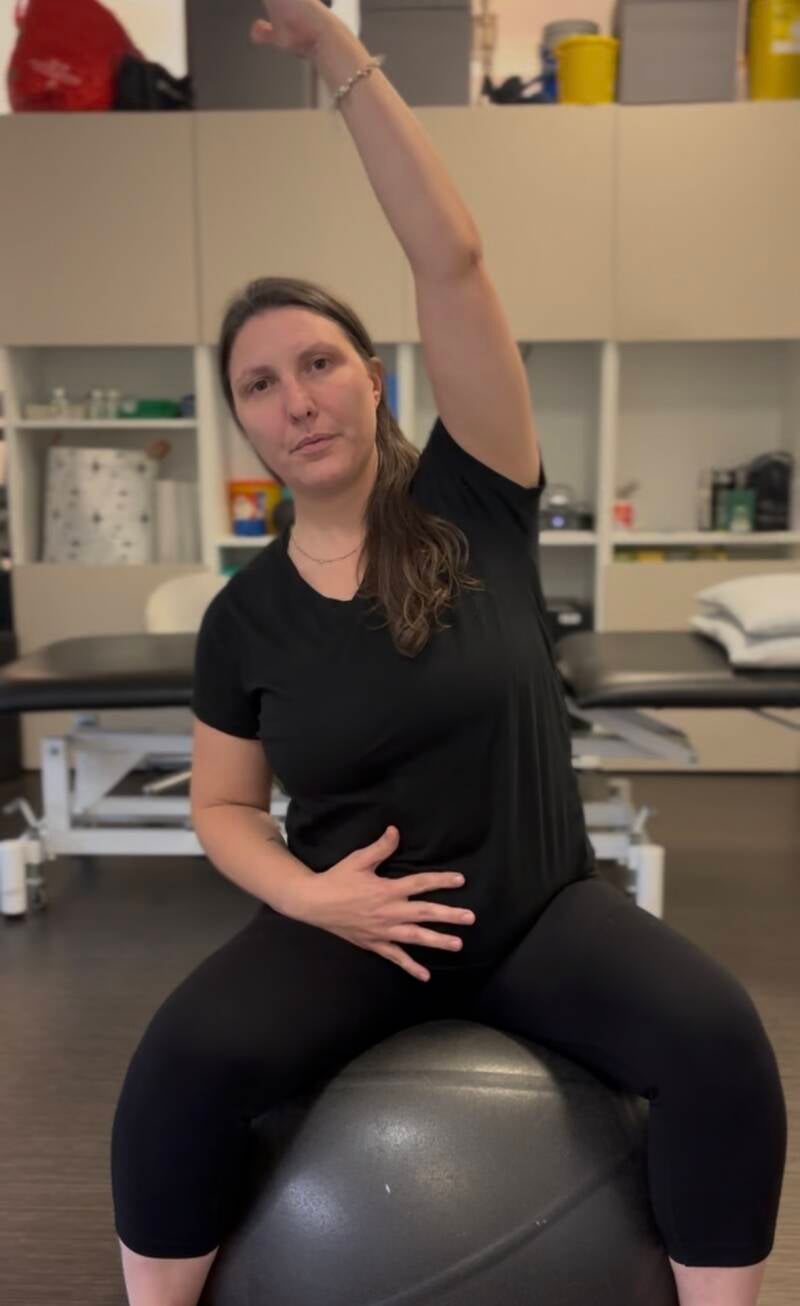
As your baby grows, your organs and abdominal contents gradually adapt to make room for your little one. You may notice increased tightness around your waist, ribs and lower back. The Side Reach on a Swiss Ball is a lovely exercise to help lengthen the torso, stretch the side body and encourage mobility through the rib cage. The Swiss ball provides support while allowing you to work on balance and deep core awareness. It can also help you find a more comfortable position and reduce the feeling of pressure through your lower back.
How to do it:
- Sit comfortably on a Swiss ball with your feet firmly planted on the floor, hip-width apart.
- Inhale as you open one arm out to the side and gradually reach it overhead.
- As you exhale, gently reach up and over to the opposite side, lengthening through your waist.
- Keep your head aligned with your spine, avoiding any forward or backward tilting.
- Inhale and gently hold the stretched position, breathing comfortably.
- Exhale as you slowly return to your starting position.
- Repeat on the other side.
Benefits:
- Lengthens the side body and stretches the muscles around the waist.
- Encourages mobility through the rib cage and upper torso.
- Helps maintain a comfortable, upright posture as your bump grows.
- Encourages gentle movement through the spine.
- The Swiss ball provides support while challenging balance and deep core coordination.
- May help ease tension around the lower back and waist.
Making Space for Your Changing Body
Pregnancy is a time to work with your body, not against it. Gentle movement, stretching and postural exercises can help you adapt to the physical changes of each trimester while maintaining strength, mobility and comfort.
Remember, the goal is not to push your body further, but to create more ease and space as your baby grows.
Listen to your body, move with your breath and enjoy this journey.
A little pregnancy reminder: Every pregnancy is different. Check out our post on Pregnancy Exercise: Recommendations, Challenges & What to Avoid to learn more about exercising safely during pregnancy, understanding your body's changing needs and knowing which movements to modify or avoid.
These movements should feel gentle and comfortable. Use a stable Swiss ball with support if needed, avoid overstretching and stop if you experience pain, dizziness or any unusual symptoms. Check with your midwife or healthcare professional before starting or modifying an exercise routine, particularly if you have pregnancy-related complications.
Content only for educational purposes
Add comment
Comments