Being active is one of the best things you can do for your physical and mental health. Whether you love running, lifting weights, Pilates, Cross Fit, dancing, participating in team sports or simply staying on the go, movement helps build strength, confidence and resilience. But there’s one area of the body that doesn’t always get the attention it deserves:
Your Pelvic Floor!!!
Pelvic floor health is about much more than preventing bladder leaks. Your pelvic floor works as part of your core system, helping to support the pelvic organs, control bladder and bowel function, contribute to sexual function and manage pressure through your body as you move. And just like any other muscle group, it needs the right balance of strength, coordination, relaxation and recovery.

The pelvic floor is a group of three distinct layers of muscles and connective tissues that sit at the base of your pelvis. They are domed downward, as a supportive hammock that helps hold the pelvic organs in place. These muscles also work closely with your diaphragm, abdominal muscles and back muscles to help manage pressure inside your abdomen. Everyday activities such as coughing, sneezing, lifting, jumping and running can increase pressure through this system.
A healthy pelvic floor needs to be able to respond appropriately.
Contracting when needed and relaxing when it’s time to relax.
Think Pelvic Floor Health Is Only About Pregnancy?
Think Again
High-impact and high-load activities can place additional demands on the pelvic floor. A well-functioning pelvic floor should be able to adapt to the demands of an active lifestyle. However, problems can occur when the demands placed on the body consistently exceed its current capacity. You might notice symptoms such as: Leaking urine during running, jumping, coughing or exercise. A sudden or frequent need to urinate. A feeling of heaviness, dragging or pressure in the pelvis. Difficulty controlling gas or bowel movements. Pelvic pain. Pain during sex. Difficulty fully emptying your bladder or bowel.
Research suggests that urinary incontinence is more common in high-impact sports involving repetitive running and jumping. Sports such as trampolining, gymnastics, volleyball, basketball, handball and athletics have reported higher rates of urinary leakage, although individual factors and training demands also influence risk.
Evidence also supports pelvic floor rehabilitation for active women experiencing urinary incontinence. A personalised pelvic floor muscle training can reduce urine leakage and improve pelvic floor muscle strength, quality of life and sports performance, particularly when training is supervised by a women's health professional.
Pelvic floor symptoms are common, but they are not something you simply have to accept as the price of being active.
How can you support your pelvic floor?
You don't necessarily need to stop the activities you love. Instead, consider building your exercise capacity gradually and paying attention to how your body responds.
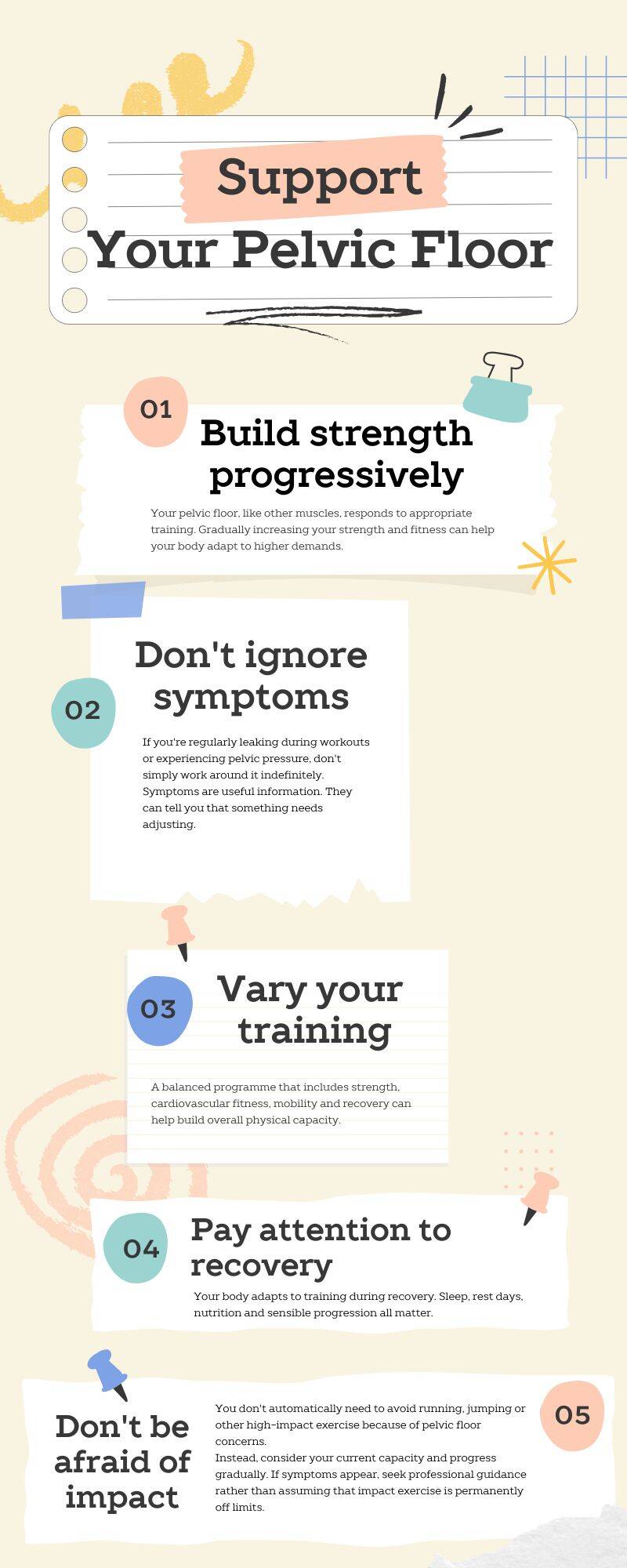
Your breathing matters

Breathing is an important part of how your core and pelvic floor work together. During exercise, particularly strength training, many people naturally change their breathing patterns as they lift or brace. That's not necessarily a problem. What matters is being able to coordinate your breathing and pressure management effectively for the activity you're doing. Rather than trying to hold your pelvic floor tightly all day, think about developing control and awareness.
Useful questions to consider:
Can you gently engage when appropriate?
Can you fully relax afterwards?
Can you breathe comfortably?
Can you increase your effort without feeling excessive pressure or strain in your pelvis?
When should you seek help?
You don't have to wait until symptoms become severe
Consider speaking to a pelvic health healthcare professional if you experience persistent or troublesome pelvic floor symptoms; particularly if they interfere with exercise, everyday life, sleep, relationships or your confidence.
Whether you're returning to exercise after pregnancy, increasing your running mileage, taking up strength training or simply noticing changes in your body, getting individual advice can help you understand what's happening and create a plan that fits your goals.

A healthy pelvic floor isn't about keeping these muscles clenched all day or avoiding the activities you love. It's about capacity, coordination and adaptability. Your pelvic floor should be able to respond to the demands you place on your body—and recover afterwards. So if you're an active woman experiencing leaking, pelvic pressure, pelvic pain or other symptoms, don't assume that you have to put up with it.
Add comment
Comments